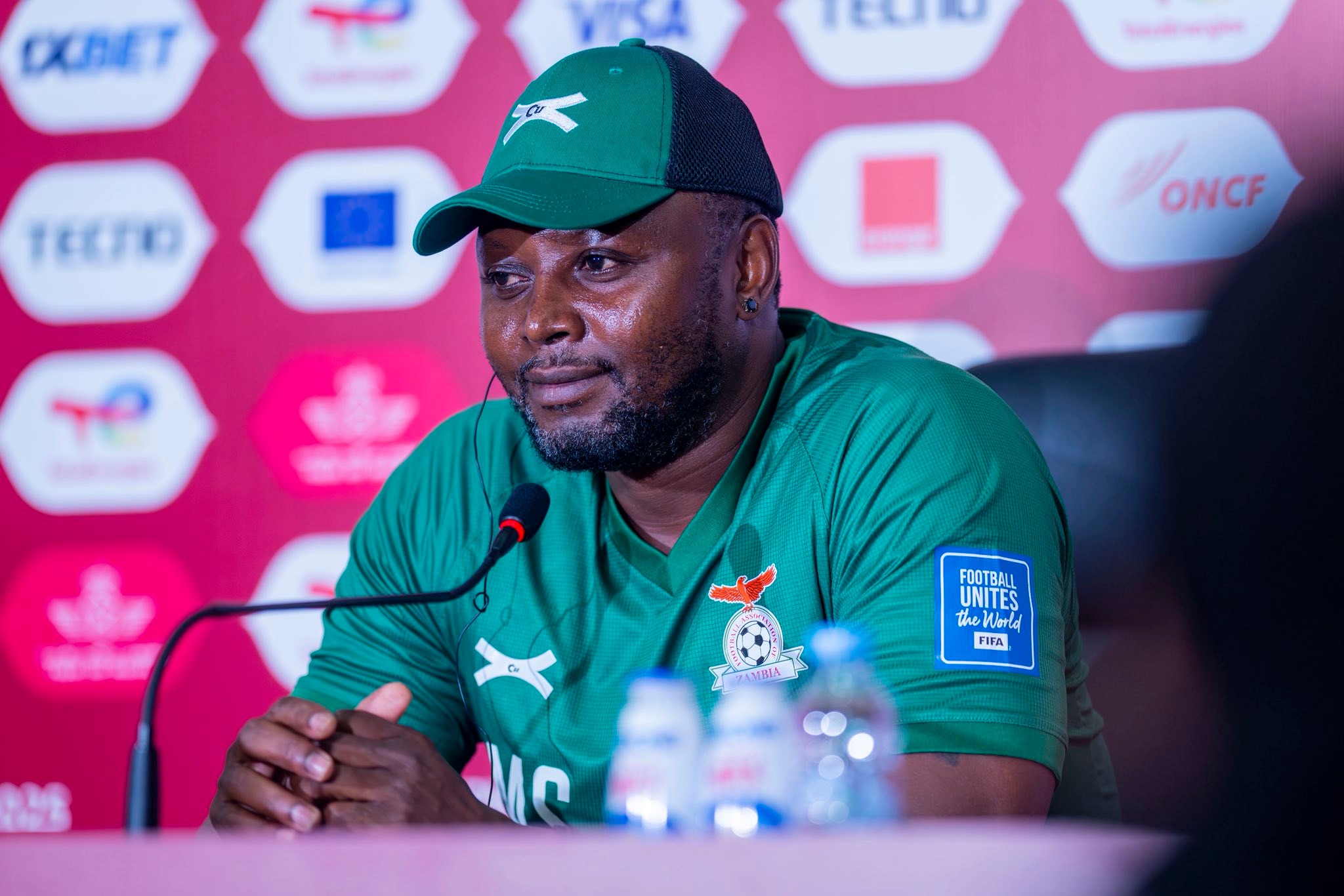
By Enock Phiri | 30th December 2025
Zambia’s AFCON campaign under Moses Sichone ranks among the most painful experiences for many Chipolopolo supporters in recent years. Beyond emotion and frustration, the reasons behind the failure are clear, measurable, and rooted in basic football fundamentals. The central question remains unavoidable: was Moses Sichone the right man to rebuild this team?
Based on what unfolded on the pitch, the answer is no.
What Worked Against Mali – and Was Never Built On
The opening match against Mali offered a rare glimpse of what Zambia could have developed into. Sichone deployed a 4-4-2 system, with Fashion Sakala leading the press and Kings Kangwa operating from the left midfield channel. Crucially, the pairing of Owen Tembo and Miguel Chaiwa as twin holding midfielders provided balance, stability, and consistent midfield presence.
This structure disrupted Mali’s rhythm and limited their ability to dominate possession. For extended periods, Mali struggled to impose their usual tempo—clear evidence that the system was effective.
Defensively, the back four was solid. Benson Sakala and Dominic Chanda functioned well as a central pairing, while Lubambo Musonda showed energy and promise. Although his overlapping runs occasionally lacked coordination with defensive midfield cover, the twin-six system made these issues manageable.
Even the goalkeeping decision showed bravery. While many expected Lawrence Mulenga to start, Sichone opted for Willard Mwanza, a call that deserved credit.
The Mali game was not the problem.
The problem was what followed.
A Broken Attacking Structure
Modern football demands structured attacking play: coordinated movements, clear transition patterns, numerical superiority in advanced zones, and intelligent exploitation of space behind defensive lines. Zambia showed none of this.
Across three matches, Zambia recorded fewer than five shots on target per game. The team appeared more focused on avoiding defeat than pursuing victory. AFCON tournaments are not won through prolonged caution; they are won through controlled ambition.
The striking unit was isolated. There was no identifiable attacking blueprint to break low blocks, no rehearsed patterns in transition, and no consistent support runs into the final third.
Inconsistency and Loss of Chemistry
Against Comoros, Sichone made minimal personnel changes but significantly altered the tactical setup. David Simukonda replaced Miguel Chaiwa in a bid to inject creativity, while Kings Kangwa was tasked with a playmaking role he failed to influence across all three matches.
More concerning was the constant reshuffling of midfield partnerships:
Mali: Owen Tembo and Miguel Chaiwa
Second match: Owen Tembo with a different partner
Final match: Tembo benched, Chaiwa paired with Joseph Liteta
Football is a collective sport. Chemistry does not develop through constant disruption.
The shift to a 4-1-3-2 formation appeared balanced on paper but failed in execution. Tactical clarity was absent, and players looked uncertain about their roles.
Morocco Match: Tactical Confusion
The final group match against Morocco exposed the deepest flaw of the campaign: unclear instructions.
Pressing triggers were inconsistent. Defensive transitions were disorganised. Attacking movements lacked cohesion. These are intelligent, capable players. Given clear roles and a structured plan, they can perform. The failure was not talent—it was tactical direction.
A Missed Opportunity to Learn
Perhaps most disappointing was that Sichone had the opportunity to build on lessons from the Avram Grant era. Instead, similar mistakes resurfaced: conservative setups, reactive game management, and substitutions that lacked tactical intent.
While changes were made earlier in matches, they rarely altered the flow or addressed the underlying problems. At times, it appeared the technical bench was more concerned with proving critics wrong than objectively correcting what was failing on the pitch.
Conclusion
This AFCON campaign was not lost due to a lack of effort or talent. It was lost because of:
Zambia does not need cosmetic changes.
Zambia needs clarity, courage, and a coherent football identity.
Without these, rebuilding becomes impossible