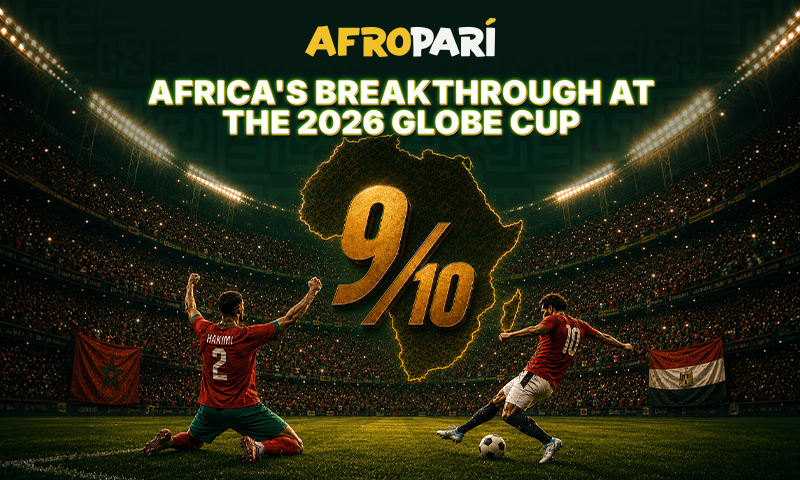
The Globe Cup 2026 was a historic milestone for African football, with nine of the continent’s ten teams reaching the knockout stage. Previously, only two sides had made it this far in nearly a century of the tournament. Africa’s Globe Cup record was rewritten, and the AfroPari explored what was behind this remarkable breakthrough.
Road to the record
Africa kicked off the tournament with ten representatives, thanks to the new 48-team format. Morocco, Senegal, Algeria, Tunisia, Egypt, Côte d’Ivoire, Ghana, Cape Verde, and South Africa secured direct qualification spots as winners of their CAF qualifying groups. The tenth team was DR Congo, which made it through the inter-confederation playoffs and immediately made its mark on the world stage by drawing with Portugal.
The group stage turned into a showcase of African football. Nine teams earned spots in the knockout stage. The sole exception was Tunisia: entering the tournament with an impeccable defensive record in qualifying, the team failed to advance from Group F after losing all three matches.
Breakthroughs and painful exits
The Globe Cup playoffs began selecting the strongest teams. Morocco overcame the Netherlands on penalties, while Egypt prevailed in a shootout against Australia. The remaining African teams were less fortunate:
- South Africa 0-1 Canada,
- Côte d’Ivoire 1-2 Norway,
- Senegal 2-3 Belgium,
- DR Congo 1-2 England,
- Cape Verde 2-3 Argentina,
- Algeria 0-2 Switzerland,
- Ghana 0-1 Colombia.
One of the standout Round of 32 clashes was Cape Verde vs Argentina. The tournament debutants had sailed through Group H undefeated, holding Spain, Uruguay, and Saudi Arabia to draws. Next, the bracket pitted them against the defending champions, Argentina, led by Messi. The score remained level at 1–1 through 90 minutes, before Cape Verde conceded twice in extra time. By the end of the tournament, one of its brightest stars was 40-year-old goalkeeper Vozinha, whose heroic saves sealed a thrilling debut and cemented their place in history. Within a month, he gained 29 million Instagram followers, surpassing every goalkeeper in the world. The smallest nation ever to reach the knockout stage, with a population of just over 525,000, left a lasting impression.
In the Round of 16, African national teams were represented by two sides – Morocco и Egypt. The Pharaohs were on the brink of a massive upset: captain Salah and his teammates held a 2-0 lead over Argentina until the 79th minute, before ultimately falling 2-3. Morocco cruised past Canada 3-0 to reach the quarterfinals for the second consecutive Globe Cup. Their run ended there with a 2–0 defeat to France. According to Opta, the Atlas Lions captain Hakimi created 21 chances across the last two editions, including 15 at the Globe Cup 2026. That is the highest tally by an African defender since 1966.
What’s behind success?
According to AfroPari analysts, these achievements are no coincidence. The new 48-team format and revamped CAF qualification system gave Africa more tournament spots, and years of development, both with players in top foreign leagues and the strengthening of domestic competitions, elevated the overall level. The continent approached the tournament with structural readiness, so the results were a natural outcome.
African national teams proved they can compete consistently at the highest level, and the Globe Cup 2030 in Morocco, Portugal, and Spain will be another major test.
Summer football doesn’t end here – WAFCON 2026 is already underway, and the top leagues kick off in August. Catch every moment with AfroPari.